The Chungbuk Times > Global > View
Reinterpreting Urban Space, SEOUL INTERNATIONAL GARDEN SHOW
제 228 호 발행일 : 2026.06.01
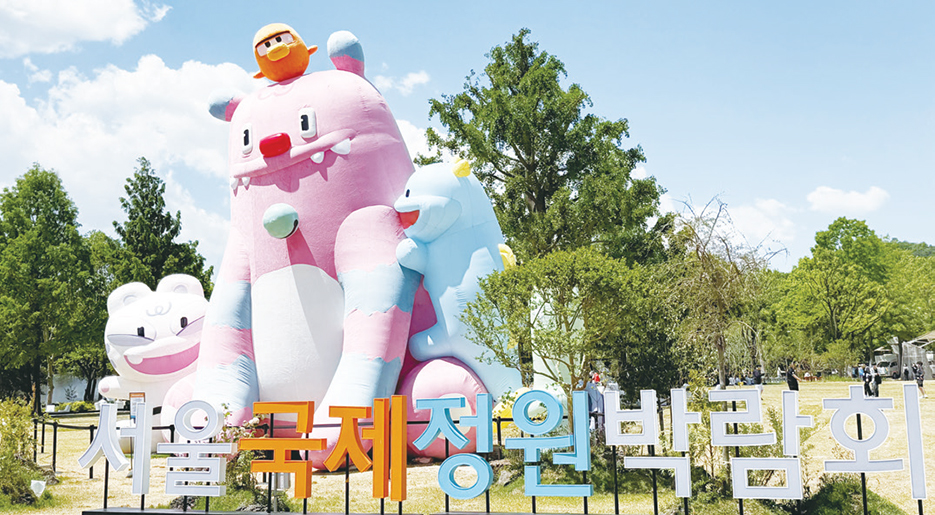
A green scent spreads among well-kept trees, and gardens and art installations fill the spaces between them. Since May 1, Seoul Forest has moved beyond its usual image as a simple urban park and turned into one large garden. The 2026 Seoul International Garden Show has opened. Held under the theme of Seoul Green Culture, the show connects Seoul’s urban culture, gardens and nature. It will continue until Oct. 27, and visitors can experience how nature and culture can exist together in the middle of the city.
The Way to Seoul Forest
Seoul Forest was once used as a royal hunting ground. Later, it became a racecourse and a golf course. In 2002, it was developed into a large public park and became a resting place for citizens. Located where the Hangang River and Jungnangcheon Stream meet, the park remains one of Seoul’s major green axes. It also plays an important role as a space for urban ecology and leisure.
The event venue is easy to reach on foot from Exit 4 of Seoul Forest Station on the Suin-Bundang Line. After leaving the exit and passing through Understand Avenue, visitors can soon find Entrance No. 2 of the Seoul International Garden Show. Access from Cheongju is also not difficult. Visitors can take an express bus from Cheongju Express Bus Terminal to Seoul Express Bus Terminal, or take a bus from Cheongju Intercity Bus Terminal to Central City Terminal or Dongseoul Bus Terminal. After transferring to the subway, they can reach Seoul Forest Station without much difficulty. Buses between Seoul and Cheongju run frequently, usually every 10 to 20 minutes. Late-night bus schedules also make the show suitable for a day trip.
The atmosphere changes as soon as visitors enter the garden show. Seoul Forest, usually known for its walking paths and lawns, is filled with gardens, installations and pop-up booths. Visitors walk at their own pace, stop in front of gardens they like, or sit on benches to rest. The space does not feel like a place made only for viewing; rather it feels like a place where visitors may want to stay for a while.
A Scene Filled with More than 150 Gardens
The garden show features more than 150 gardens created by private companies, public institutions, local governments and teams selected through public contests. 32 companies, including Nongshim, Mercedes-Benz, KB Securities, and Starbucks presented their brand identities through gardens. Their gardens were not simple displays of logos or brand colors. Each space showed how a brand could blend into the forest.
In the Nongshim garden, Shin Ramyun mascot sculptures were hidden among trees. The idea of placing familiar characters inside the forest felt simple but clever. The Mercedes-Benz garden created a different mood. Pinwheels using the brand logo were placed throughout the forest, and they created a stylish and memorable visual effect when the wind turned them. The Starbucks garden used Bearista, the brand’s official character. The Bearista sculpture placed in the green forest matched the brand’s image well, and it became a popular photo spot for visitors.
Local governments also created spaces that showed their regional identities. Ulsan, Chungju, Jeonju, and Gyeonggi-do participated, and the Korea Racing Authority presented a mini garden with horse models placed in the forest. Among them, the pop-up gardens made by Seoul’s local districts were especially eye-catching. Seongdong-gu’s pop-up garden was inspired by Seongsu-dong’s handmade shoe street. It was interesting to see how the district connected its industrial history with the concept of a garden. Each district used different materials and presentation styles, so it took quite a long time to look around only the district pop-up garden area. Five public contest gardens and eight character pop-up gardens, including LEGO-themed spaces, were also placed around the site. These gardens made the whole show feel more colorful and varied.
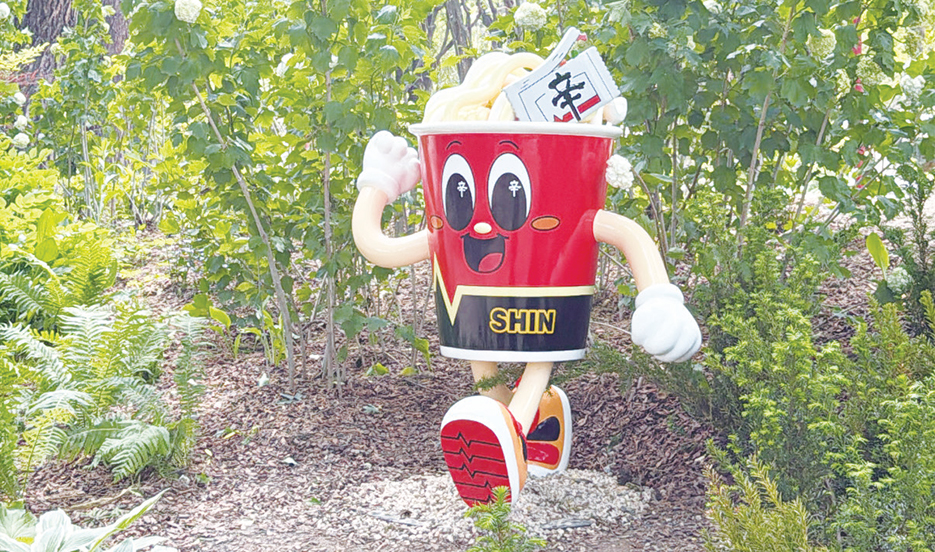
▲ A Shin Ramyun mascot statue stands among trees.
A Forest with Pokémon, Pokémon Secret Forest
One of the most talked-about parts of the garden show is Pokémon Secret Forest. The zone, which runs until June 21, places various Pokémon sculptures inside the forest area of Seoul Forest. It creates a special atmosphere where natural scenery and characters come together. As Pokémon has become popular again and is often mentioned on social media, many visitors came to the garden show mainly to see this zone.
Inside the area, familiar Pokémon sculptures such as Charmander, Bulbasaur and Squirtle were placed naturally among trees and bushes. The sculptures varied in sizes and locations, so visitors could enjoy finding Pokémon in unexpected spots while walking.
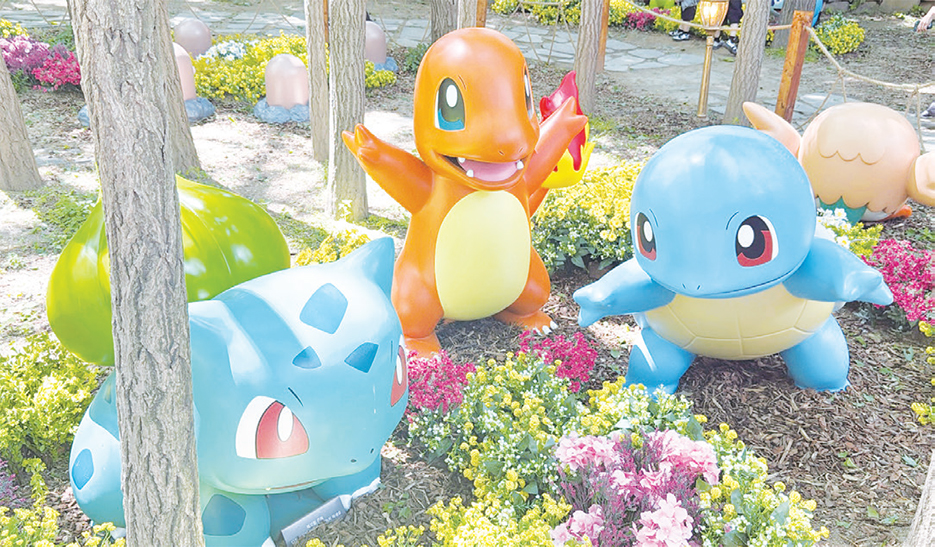
The zone also offered more than a simple show. Visitors could take photos with Pokémon at photo booths, and there was a game experience space using the Nintendo Switch. An official store selling goods was also open, and a separate line was formed in front of the store as visitors tried to buy souvenirs after viewing the exhibition. Nevertheless, actual purchases did not take too long. NFC signs were installed around the forest. Visitors could simply tap their smartphones on the signs and move directly to the goods purchase website. This allowed visitors to choose and order products without standing in a long line, while still enjoying the exhibition.
Pokémon Secret Forest requires an on-site reservation. Reservations begin at 7 a.m., and entry starts at 12 p.m.. When a CBT reporter visited the site, the reservation number was in the 500s. The company expected the waiting time to be about 45 minutes, but the actual wait took about two hours. Visitors planning to see Pokémon Secret Forest should arrive at Seoul Forest early in the morning before lunchtime and make a reservation first. After completing the reservation, they can look around other parts of the show or have a meal at nearby food trucks while waiting.
A Show to Enjoy while Resting
Food truck zones were set up near the lake inside the venue and near Pokémon Secret Forest. The menus included drinks and simple meals. The CBT reporter tried Churros and Dakgangjeong (Deep-fried and Braised Chicken) at the site. One noticeable point was that the Dakgangjeong was served in a reusable container. This showed an environmentally friendly operation method, but visitors should pay attention to proper disposal procedures. Some visitors were seen throwing reusable containers into regular trash bins, although the containers were supposed to be returned to designated collection boxes.
Benches and rest areas were also placed throughout the venue. Thanks to these resting spots, visitors could enjoy the large site at their own pace without becoming too tired.
There are also many places to visit after leaving the show. Understand Avenue, which visitors pass on the way to the show, has many restaurants like Kebab and street foods and small shops. A cafe street is located north of Seoul Forest. If visitors walk a little farther, they can reach Seongsu-dong, an area full of unique cafes and pop-up stores. Visiting Seongsu-dong along with the garden show also fits well into a one-day trip.
The Show Seen by Citizens
Visitors at the venue were quite diverse. Some citizens looked around the gardens in small groups, while middle and high school students in school uniforms were often seen moving around under their teachers’ guidance. Seoul Forest was being used as a field trip site outside the classroom. Conversations in English, Japanese, and Chinese were also heard in several places. Foreign visitors took photos in front of gardens or carefully read information boards. Their presence showed that this show was not only for Korean visitors.
Shin Ye-mi (Seoul, 24), said “Pokémon Secret Forest became the most talked-about part of the show, but the pop-up gardens made by Seoul’s local districts left the strongest impression.” She said it was interesting to see how each district created a garden with a different story. She also added that the show was comfortable to walk around because rest areas were placed throughout the venue.
She also mentioned one disappointing point. She said she expected many kinds of flowers because the event was called a garden show, but there were fewer flower varieties than she had expected. She said some flowers and plants did not have sufficient explanations, and information for foreign visitors seemed even more limited. This part appears to need improvement in the future.
The Way a City Becomes a Garden
The Seoul International Garden Show is held at a different park in Seoul each year. Last year, it was held at Boramae Park, and this year Seoul Forest became the main venue. This method of changing the venue each year is also an experiment that shows how one urban space can be reinterpreted in many different ways.
This year’s show gave the impression that the experiment has worked quite well. Companies, local governments, public institutions and citizen teams each told their own stories through the common language of gardens. Some gardens offered shade where visitors could simply sit and rest. Other gardens used characters, brands or regional stories to attract attention. Their purposes were different, but each garden played its own role inside the single space of Seoul Forest.
The Seoul International Garden Show will continue until Oct. 27. As the seasons change, the gardens will also change. The bright green of spring will become the deep green of summer, and Seoul Forest will take on another face when autumn colors arrive. For those who want to experience nature and culture together in the city, Seoul Forest is a place worth visiting this year.
By Kang Sung-eon
reverse0423@chungbuk.ac.kr