

 최종편집 : 2026.09.07 월 19:58
  All
All People


 Choi Yun-ji
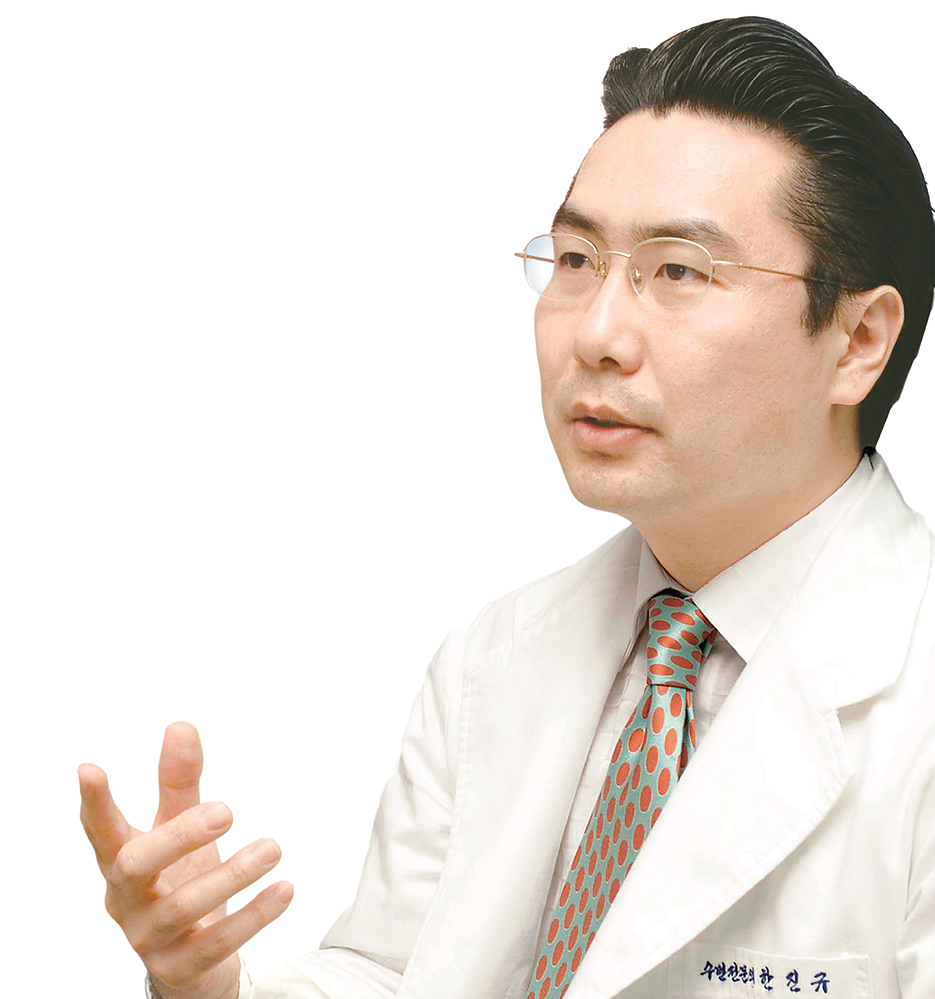
In modern society, sleep deprivation is a common health problem for many people. In particular, there are increasing cases of insomnia and chronic fatigue among college students due to academic pressure and irregular lifestyles. As a result, interest in the impact of sleep on health and quality of life is also growing. A CBT reporter met Han Jin-kyu, a sleep medicine specialist who has been treating and researching sleep disorders and insomnia, and heard about the importance of sleep issues in modern life and healthy sleep habits.
Q1. Please briefly introduce yourself and tell us more about the sleep clinic.
I am a neurologist, and I treat brain-related conditions such as headaches, dementia, stroke, and Parkinson’s disease. Unlike psychiatry, neurology can be regarded as a medical field that deals with the brain itself, rather than the mind. I became a sleep specialist in the U.S. after completing a sleep fellowship, and I currently run the Seoul Sleep Center.
A sleep clinic is not a just for those who cannot sleep, but is a specialized medical institution that diagnoses and treats various types of sleep problems such as excessive sleep, sleep talking, and related abnormal behavior. Patients visit not only for sleeplessness but for various other reasons such as daytime drowsiness, chronic fatigue, and abnormal behavior during sleep. The important point is that sleep clinics do not simply prescribe sleeping pills. Instead, they analyze the causes of sleep disturbance through tests and consultations, and provide appropriate treatment. In some cases, other physical causes such as heart conditions, breathing issues, and body temperature control problems may be found, and treatment may also include correcting lifestyle habits. In other words, sleep clinics are not just a place to sleep but a place to find and solve the causes that interfere with sleep.
Q2. What led you to study sleep medicine?
I was originally a neurologist who saw a lot of headache patients, but I found that many of them simultaneously suffered from sleep problems. However, at the time, sleep treatment in Korea was mostly medication-centered. In many cases, patients felt burdened by taking medication, and their problems were not truly resolved. This made me realize the importance of studying the issue in depth, so I went to the U.S. to pursue sleep medicine.
The U.S. already had a well-established sleep research environment, insurance system, and treatment system. On the other hand, Korea at that time lacked sufficient diagnostic and treatment infrastructure. What I learned during my studies was that sleep is not just a lifestyle issue but a very important factor that is directly connected to the brain. If sleep is disrupted, brain function will eventually decline and it can lead to brain disease. Therefore, I came to think that taking good care of sleep is one of the most important ways to protect the brain.
Q3. How serious is sleep deprivation among people today?
The vast majority of people today do not live in an environment where they can sleep naturally. Rather, they live in an environment where they cannot sleep unless they make conscious efforts. In the past, as the sun went down, it became dark and activity naturally decreased, making it easier for people to fall asleep. However, with the invention of electricity and the subsequent development of the digital environment, it became possible to live at night as if it were daytime. In particular, as the use of digital devices such as smartphones increases, the boundaries between day and night have completely collapsed. People continue to be active at night, and their sleeping hours are decreasing accordingly. Korea is one of the countries with very short sleeping hours, especially because of the intense competition and strong culture of “quickly.” The structure of sleeping late and less has become commonplace. In this environment, individuals are bound to fall into sleep deprivation unless they make conscious efforts to avoid it. As a result, the current sleep deprivation problem is very serious.
Q4. Why is it that the younger generation, in particular, struggles to sleep?
The younger generation tends to stay active and often have many things to do at night. Meeting friends, working, studying, or staying up late for various reasons. The use of smartphones adds to the problem. They do not just take away time and act as a signal to the brain that it is still daytime. This inhibits melatonin secretion and makes it harder to fall asleep. Also, people in their 20s and 30s tend to go to bed late. As environmental factors are added to these physiological characteristics, sleep is delayed even further. In the end, it can be seen that the younger generation today can be seen as living in an environment where it is difficult to fall asleep naturally without deliberate effort.
Q5. What problems do college students who visit sleep clinics usually have?
Young patients account for about 20 to 30% of the total. College students are more likely to complain of drowsiness, chronic fatigue, and decreased concentration during the day than insomnia. Many come to the clinic because they doze off in class or cannot concentrate when they study. These days, there are also many cases where lifestyle patterns are completely reversed. For instance, some individuals experience a complete reversal of day and night—such as YouTubers who work across different time zones overseas. In such cases, it is more accurate to view the issue as a disruption of the sleep rhythm itself, rather than simply a problem of sleeplessness.
Q6. What is the most important thing when addressing sleep problems?
The most important thing is to find the root cause. Prescribing sleeping pills just because people cannot sleep are not a fundamental solution. What matters is understanding why they cannot sleep. Another important factor is lifestyle. In many cases, people engage in habits that interfere with their sleep. For example, the habit of using a smartphone until late at night is typical. In such case, changing behavior is more important than taking medicine. Thus, a cognitive and behavioral approach is essential for sleep treatment.
Q7. Recently, melatonin supplements have become much more common on the market, actually can they help?
In many cases, melatonin supplements do not have a direct effect on sleep. Some products are described as vegetable melatonin, but they are often different from or close to similar substances to the human body’s melatonin hormone.
Melatonin is generally used in limited cases such as when secretion decreases with age, and only a small amount must be used under the prescription of a doctor in Korea. In particular for Asians, it may not be advisable to purchase and take such medications casually, as there are restrictions on consuming doses above a certain level.
Melatonin is a hormone naturally secreted in response to darkness and lowered body temperature. Yet many people attempt to supplement melatonin externally while continuing to live in bright environments. This approach does not address the root of the problem and therefore cannot be considered as a fundamental solution. Melatonin is originally used when natural secretion decreases in the elderly. It is not that young people lack melatonin, rather their secretion is often suppressed due to their lifestyle. Consequently, it is important to change the environment and lifestyle first, rather than relying on supplements.
Q8. How does sleep deprivation affect People’s health?
If people do not sleep enough, they begin to experience tiredness and poor concentration first. However, if this condition persists, emotional instability can arise and lead to problems such as depression and ADHD. Lack of sleep can also cause ADHD-like symptoms, especially in young people. It can contribute to conditions such as high blood pressure, diabetes, heart disease, and stroke, and is also closely related to dementia. Dementia-related substances are removed during sleep, and if people do not sleep properly, these substances accumulate. Therefore, sleep is not just a rest, but an important process that sustains the brain.
Q9. What are some practical ways to build healthy sleep habits and get a good night’s rest?
Sleep does not have to be complicated. The key lies in two main practices. First, expose yourself to sunlight in the morning. Morning light helps set the body’s circadian rhythm, naturally leading to drowsiness about 15 hours later. The second is to create a dark environment at night. People need to create an environment that lowers lights, reduces blue lights, and lowers body temperature. The equally important thing is not the bedtime itself but the wake‑up time. Regardless of how late one goes to bed, maintaining a consistent wake‑up time each morning is essential for preserving the body’s rhythm. It is also important not to oversleep even on weekends.
Q10. What would you like to say to the younger generation who put off sleeping in their busy lives?
A person’s basics are eating well, sleeping well, and excreting well. If these three things fall apart, their health will eventually fall apart. While people can cut back on sleep to achieve short‑term results, such effects are unsustainable and quickly fade. In the long run, brain function will decline and health will deteriorate. If people wish to live longer and healthier lives, I believe that prioritizing sleep from now on is the most important investment they can make.
By Choi Yun-ji
cjyyuyu@chungbuk.ac.kr


 Quick News