

 최종편집 : 2026.10.19 월 17:57
  All
All Society & Global


 Kang Sung-eon
The Business Behind the Glamorous Festivals
2026 is truly a series of mega sports events relays. Starting with the Milano-Cortina Winter Olympics in February, major global sporting events will continue throughout the year, including the World Baseball Classic (WBC), in which Korea reached the quarterfinals for the first time in 17 years, the World Cup in North America, and the Aichi-Nagoya Asian Games in September. The public goes wild over their national teams’ victories and medal counts. However, off the field, a fierce global business involving astronomical amounts of money lies behind it. Hosting and running international events is more than just a sports gathering. It is a massive marketing show intertwined with nations and giant capital.

▲ Kim Gil-li(center) and Choi Min-jeong(left) celebrate their gold and silver medals at the 2026 Milano Cortina 2026 Winter Olympics.
Global Sponsorships and Fragmented Broadcasting Rights
Hosting an event costs an enormous amount of money, but global companies are willing to pay astronomical sponsorships to participate. Park Sung-bae(Professor of Hanyang University’s Major in Sport Management Division of Sport Industry and Science) points to global reach as the key factor. “Olympics or World Cup sponsorships give companies exclusive marketing rights,” Prof. Park explained. “This becomes a huge strategic asset for building networks with governments and broadcasters, and for entering the global market.”
Also, the broadcasting rights market is changing rapidly. It is moving away from the traditional media package that relied on TV stations, and the rights are being fragmented. For example, a global OTT company, Netflix monopolized the broadcasting rights for the 2026 WBC in Japan. This is a representative case showing this market shift. Prof. Park analyzed, “With the rise of OTT and short-form media, various platforms like highlights and mobile clips have emerged. Broadcasting rights are diversifying to meet the specific needs of customers.”
The White Elephant Dilemma
Despite the diversified revenue models, the economic reality for host cities after the closing ceremony is often harsh. Around the world, grand stadiums built with massive taxes repeatedly face the White Elephant Dilemma. This term originates from an ancient Thai tradition where the king would give rare white elephants to courtiers he disliked. While seemingly a noble gift, these animals were sacred and could not be used for labor. Instead, they required astronomical costs for their care and feeding, eventually bankrupting the owner.
In a modern context, mega sports event facilities have become such sacred burdens. The Incheon Asian main Stadium and the sliding center of the PyeongChang 2018 Winter Olympics are painful domestic examples. They cost hundreds of millions of KRW to build, but without clear post-event uses, they generate billions of KRW in deficit every year—costly to maintain, yet difficult to abandon.
Regarding the structural cause of this problem, Prof. Park pointed out the gap in demand forecasting. He noted, “Facilities are built to meet the minimum size required by international sports federations. They are optimized for the event itself. However, after the closing ceremony, they must rely on everyday demand, which inevitably leads to a significant deficit.” Crucially, the glamorous economic impact reports published before the events usually leave out the massive maintenance and repair costs that occur after the closing.
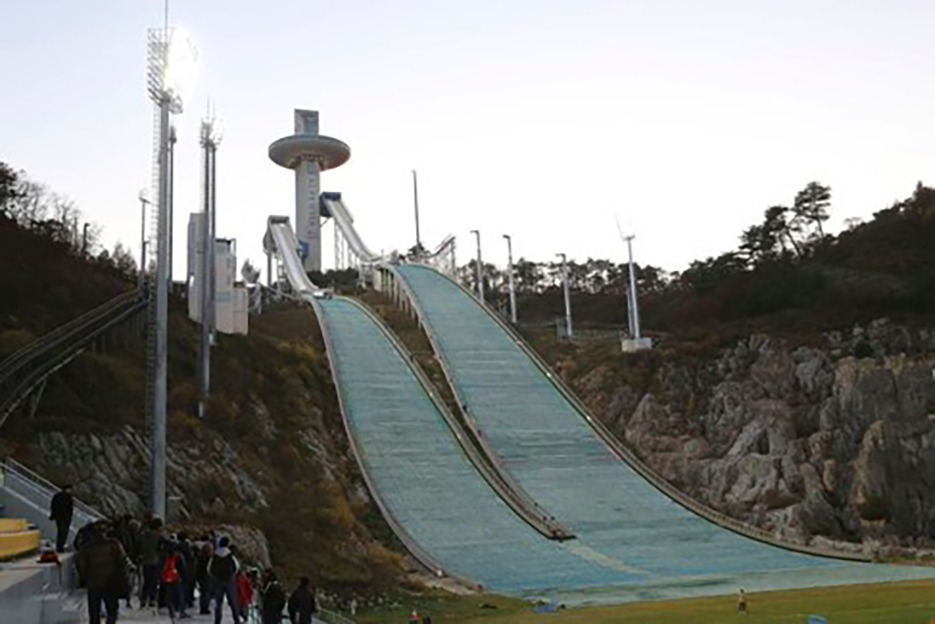
▲ The PyeongChang Sliding Center, once a symbol of national pride, now stands as a representative White Elephant due to its massive maintenance costs.
Soft Power and the Evolution of Hosting
Why do governments continue to compete for mega sports events when deficits are obvious? The answer can be found from a political and administrative perspective. Prof. Park explained, “From the view of politicians or mayors, a mega sports event is not just a profitable business but a national project. There are expectations for intangible values or soft power such as boosting the national image, strengthening diplomatic status, and showcasing the administration’s achievements, which cannot be translated into economic figures.”
However, as the severe economic limitations become clear, the governance of hosting and managing mega sports events is also at a crossroads. Co-hosting, rather than a single city bearing the whole burden, is emerging as a new alternative. Prof. Park added, “By co-hosting across multiple cities and countries, like the Milano Cortina 2026 Winter Olympics or the World Cup co-hosted by three North American countries, they are reducing the cost of building new stadiums. International sports federations like IOC and FIFA are also changing their operating philosophies by focusing on cost reduction and sustainability such as reducing the size of participation. Ultimately, we are moving away from blind expansion, controlling costs, and seeking truly sustainable events.”
By Kang Sung-eon
reverse0423@chungbuk.ac.kr


 Quick News